



Can a standard centrifugal pump handle viscous fluids?
Jul 04, 2025
Leave a message
Can a standard centrifugal pump handle viscous fluids? That's a question I get asked a lot as a supplier of Standard Centrifugal Pump. Well, let's dive right in and break it down.
First off, let's understand what a standard centrifugal pump is. It's a workhorse in the world of fluid handling. These pumps use an impeller that rotates at high speed, creating a centrifugal force that moves the fluid from the center of the impeller to the outer edges and then into the discharge pipe. They're commonly used in a wide range of applications, from water supply systems to industrial processes. You can check out our 1 2 Hp Centrifugal Pump for a good example of a standard centrifugal pump in action.
Now, when it comes to viscous fluids, things get a bit tricky. Viscosity is a measure of a fluid's resistance to flow. Think of honey compared to water. Honey is much more viscous, and it doesn't flow as easily. Standard centrifugal pumps are designed primarily for low - viscosity fluids like water. When you try to use them with viscous fluids, several issues can pop up.
One of the main problems is efficiency. The impeller in a standard centrifugal pump is optimized for low - viscosity fluids. When a viscous fluid is introduced, the fluid's resistance to flow causes the impeller to work harder. This means that more energy is required to move the same volume of fluid compared to a low - viscosity fluid. As a result, the pump's efficiency drops significantly. You might find that the pump uses a lot more power to achieve the same flow rate, which can lead to higher operating costs in the long run.
Another issue is head and flow rate. The head of a pump refers to the height to which the pump can lift the fluid, and the flow rate is the volume of fluid that the pump can move per unit of time. With viscous fluids, the pump's ability to generate head and maintain a good flow rate is reduced. The increased resistance of the fluid makes it difficult for the pump to push the fluid through the system. So, you might end up with a lower flow rate and less pressure at the discharge end than you would with a low - viscosity fluid.
There's also the matter of cavitation. Cavitation occurs when the pressure in the pump drops below the vapor pressure of the fluid, causing vapor bubbles to form. These bubbles then collapse when they reach a region of higher pressure, which can cause damage to the impeller and other pump components. Viscous fluids are more prone to cavitation because they have a higher internal resistance. The slower flow of the viscous fluid can create areas of low pressure within the pump, increasing the likelihood of cavitation.
However, that doesn't mean that a standard centrifugal pump can't handle viscous fluids at all. In some cases, if the viscosity is relatively low, say up to around 100 centipoise (cP), a standard centrifugal pump might be able to work, although with reduced efficiency. But as the viscosity increases beyond this range, the performance of the pump will degrade rapidly.
If you do need to handle viscous fluids, there are some modifications that can be made to a standard centrifugal pump. For example, you can increase the size of the impeller. A larger impeller can generate more force to move the viscous fluid. You can also adjust the speed of the pump. Running the pump at a lower speed can sometimes help to reduce the stress on the impeller and improve the pump's performance with viscous fluids.
Another option is to use a different type of pump altogether. Positive displacement pumps, such as gear pumps or screw pumps, are better suited for handling viscous fluids. These pumps work by trapping a fixed volume of fluid and then forcing it through the system. They're designed to handle high - viscosity fluids more efficiently than standard centrifugal pumps. But if you already have a standard centrifugal pump and don't want to invest in a new pump right away, the modifications mentioned above can be a cost - effective solution.

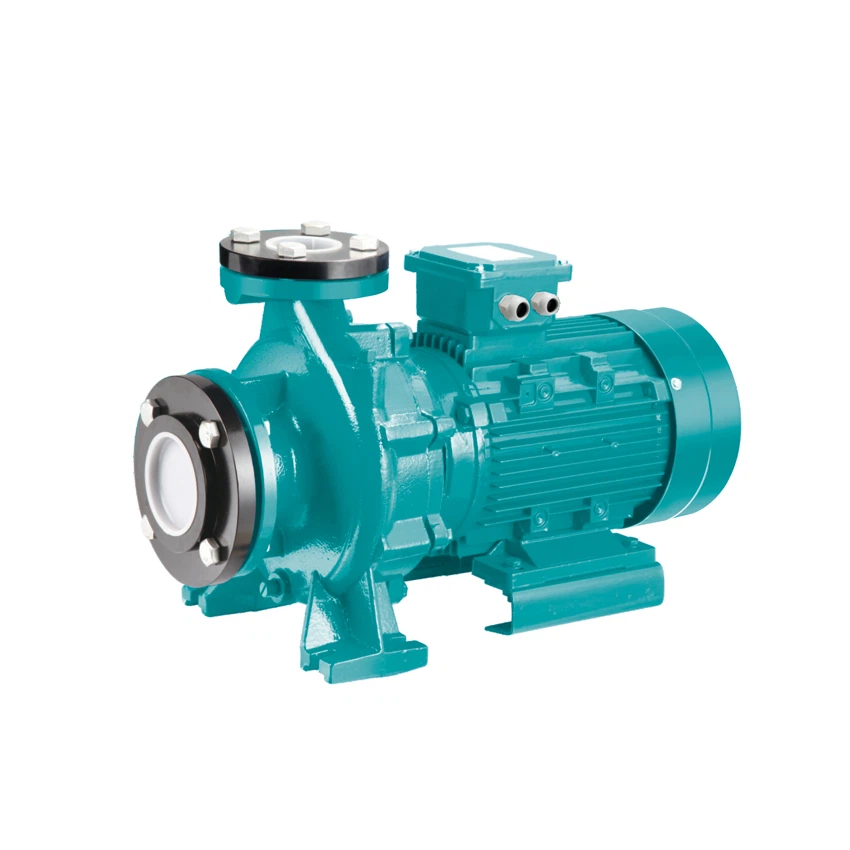
At our Standard Centrifugal Pump supply business, we've seen a wide range of applications where customers have tried to use standard centrifugal pumps with viscous fluids. We've worked with them to find solutions, whether it's through pump modifications or suggesting alternative pump types.
So, to sum it up, while a standard centrifugal pump can handle viscous fluids to some extent, especially at low viscosities, its performance will be significantly affected as the viscosity increases. If you're dealing with viscous fluids on a regular basis, it's important to carefully consider your pump selection and whether modifications to a standard centrifugal pump are sufficient or if a different type of pump is needed.
If you're in the market for a pump to handle fluids, whether they're low - viscosity or viscous, we're here to help. Our team of experts can provide you with in - depth advice on the best pump for your specific application. We can also offer solutions for modifying your existing standard centrifugal pump if that's what you need. Don't hesitate to reach out and start a conversation about your fluid - handling requirements. We're eager to work with you to find the most cost - effective and efficient solution for your business.
References
- "Pump Handbook" by Igor J. Karassik et al.
- "Centrifugal Pumps: Design and Application" by Heinz P. Bloch and Fred K. Geitner.
Send Inquiry