



How to calculate the NPSH available for a standard centrifugal pump?
Aug 26, 2025
Leave a message
Hey there! I'm a supplier of standard centrifugal pumps, and today I wanna chat about how to calculate the Net Positive Suction Head Available (NPSH available) for these pumps. It's a super important topic if you're looking to get the most out of your pump and avoid some common issues.
First off, let's quickly understand what NPSH available is. NPSH available is the amount of pressure available at the suction port of the pump to keep the liquid from vaporizing. When the pressure at the suction side drops too low, the liquid can start to boil and form vapor bubbles. These bubbles then collapse when they reach higher pressure areas in the pump, causing a phenomenon called cavitation. Cavitation can damage the pump, reduce its efficiency, and make a whole lot of noise. So, calculating the NPSH available correctly is crucial to prevent all these problems.
To calculate the NPSH available, we need to consider a few factors. Let's break it down step by step.
Step 1: Determine the atmospheric pressure
The atmospheric pressure plays a big role in the NPSH available calculation. The standard atmospheric pressure at sea level is about 14.7 psi (pounds per square inch) or 101.3 kPa (kilopascals). But keep in mind that the atmospheric pressure can vary depending on your location and altitude. You can find the local atmospheric pressure from a weather station or use an online calculator.
Step 2: Calculate the static head
The static head is the vertical distance between the liquid level in the suction tank and the centerline of the pump suction port. If the liquid level is above the pump suction port, it's called a positive static head. If it's below, it's a negative static head (also known as a suction lift).
To calculate the static head, measure the vertical distance in feet or meters. Then, convert this distance to pressure using the specific gravity of the liquid. The formula to convert height to pressure is:
Pressure (psi) = Height (ft) x Specific Gravity x 0.433
or
Pressure (kPa) = Height (m) x Specific Gravity x 9.81
For example, if you have a positive static head of 10 feet and the liquid has a specific gravity of 1 (like water), the pressure due to the static head would be:
Pressure (psi) = 10 ft x 1 x 0.433 = 4.33 psi
Step 3: Account for the friction losses in the suction piping
As the liquid flows through the suction piping, there are friction losses that reduce the pressure available at the pump suction. These losses depend on the pipe diameter, length, roughness, and the flow rate.
You can use the Darcy-Weisbach equation or the Hazen-Williams equation to calculate the friction losses. However, these equations can be a bit complex. A simpler way is to use friction loss charts or online calculators that are based on these equations.
Let's say you find that the friction losses in your suction piping are 2 psi. You'll need to subtract this value from the total pressure available at the pump suction.

Step 4: Consider the vapor pressure of the liquid
Every liquid has a vapor pressure, which is the pressure at which the liquid starts to vaporize. The vapor pressure increases with temperature. You can find the vapor pressure of the liquid from a vapor pressure table or use an online calculator.
For example, the vapor pressure of water at 68°F (20°C) is about 0.363 psi (2.5 kPa). You'll need to subtract the vapor pressure from the total pressure available at the pump suction.
Step 5: Calculate the NPSH available
Now that we have all the necessary values, we can calculate the NPSH available using the following formula:
NPSH available = Atmospheric Pressure + Static Head - Friction Losses - Vapor Pressure
Let's put it all together with an example. Suppose you're using a standard centrifugal pump to pump water at 68°F (20°C). The local atmospheric pressure is 14.5 psi, the positive static head is 10 feet (which we calculated earlier to be 4.33 psi), the friction losses in the suction piping are 2 psi, and the vapor pressure of water at 68°F is 0.363 psi.
NPSH available = 14.5 psi + 4.33 psi - 2 psi - 0.363 psi = 16.467 psi
That's it! You've calculated the NPSH available for your standard centrifugal pump.
Now, it's important to note that the pump manufacturer will also specify the Net Positive Suction Head Required (NPSH required) for the pump. The NPSH available must be greater than the NPSH required to avoid cavitation. If the NPSH available is less than the NPSH required, you may need to make some adjustments, such as increasing the static head, reducing the friction losses, or using a different pump.
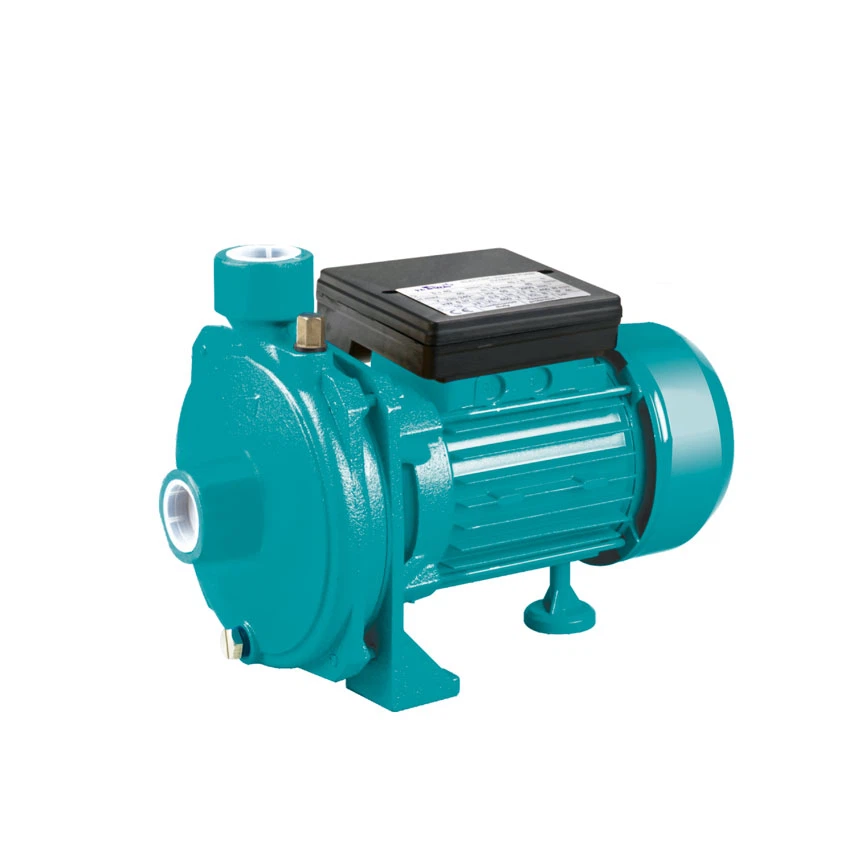
At our company, we offer a wide range of Standard Centrifugal Pump that are designed to meet various applications. We also have Stainless Centrifugal Pump for more corrosive environments and 1.5 Hp Centrifugal Water Pump for smaller-scale operations.
If you're in the market for a centrifugal pump and need help with the NPSH calculation or any other technical aspects, don't hesitate to reach out. We're here to assist you in finding the right pump for your needs and ensuring its proper operation.
References
- Crane Technical Paper No. 410, "Flow of Fluids Through Valves, Fittings, and Pipe"
- Perry's Chemical Engineers' Handbook, 8th Edition
I hope this blog post has been helpful to you. If you have any questions or need further clarification, feel free to drop a comment below. Happy pumping!
Send Inquiry