



How to control the discharge pressure of a centrifugal pump?
Oct 21, 2025
Leave a message
As a centrifugal pump supplier, I understand the importance of controlling the discharge pressure of centrifugal pumps. Proper pressure control not only ensures the efficient operation of the pump but also extends its service life and enhances the safety of the entire system. In this blog post, I'll share some effective ways to control the discharge pressure of a centrifugal pump.
1. Throttle the Discharge Valve
One of the simplest and most common methods to control the discharge pressure of a centrifugal pump is by throttling the discharge valve. By adjusting the opening of the valve, we can restrict the flow of the fluid, which in turn increases the pressure. When the valve is fully open, the pump operates at its maximum flow rate with relatively low pressure. As we gradually close the valve, the flow rate decreases, and the pressure at the discharge side rises.
However, this method has its limitations. Excessive throttling can lead to a significant increase in power consumption, as the pump has to work harder to overcome the increased resistance. Moreover, it may cause cavitation if the pressure at the suction side drops too low. Cavitation can damage the pump impeller and other components, reducing the pump's efficiency and lifespan. Therefore, when using this method, we need to find a balance between pressure control and pump performance.
2. Adjust the Pump Speed
The discharge pressure of a centrifugal pump is directly proportional to the square of its speed. So, adjusting the pump speed is an effective way to control the discharge pressure. We can use a variable frequency drive (VFD) to change the pump's speed. A VFD allows us to adjust the frequency of the electrical power supplied to the pump motor, thereby changing the motor's speed.
When the pump speed is reduced, the discharge pressure decreases, and the flow rate also drops. This method is more energy - efficient than throttling the discharge valve, as the power consumption of the pump is proportional to the cube of the speed. For example, if we reduce the pump speed by 20%, the power consumption will be reduced by approximately 50%. Additionally, adjusting the speed can avoid the problems associated with throttling, such as cavitation and excessive power consumption.
3. Use a Bypass Line
Installing a bypass line is another way to control the discharge pressure of a centrifugal pump. A bypass line is a pipe that connects the discharge side of the pump to the suction side or a lower - pressure point in the system. By opening a valve in the bypass line, a portion of the fluid can be redirected back to the suction side, reducing the effective flow rate through the main system and thus controlling the discharge pressure.

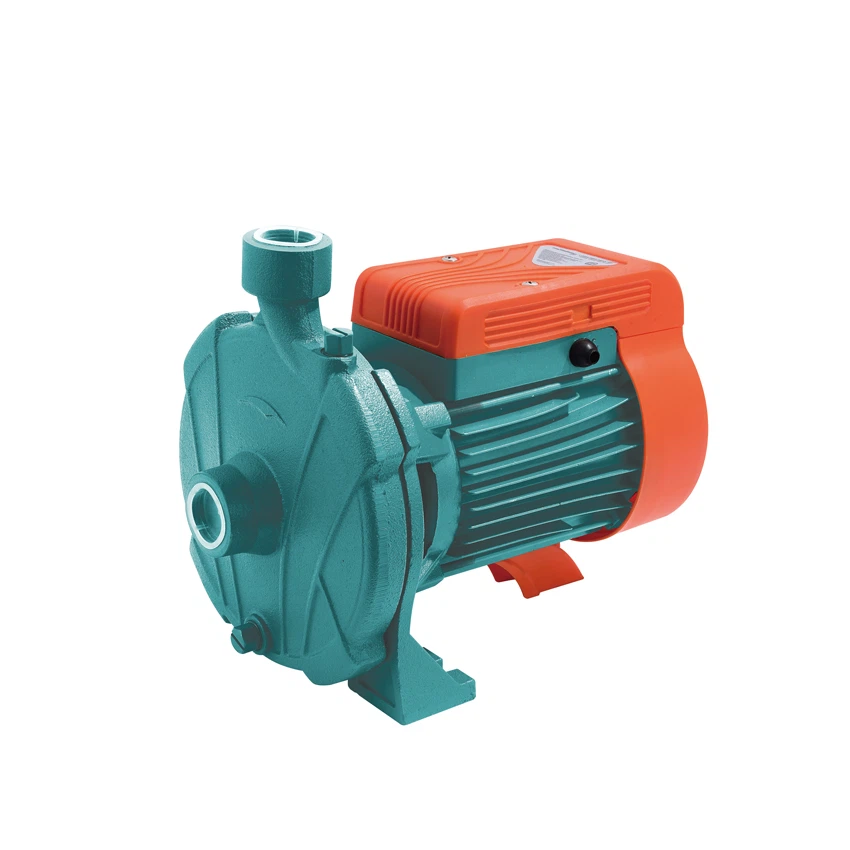
This method is particularly useful when the pump needs to operate at a constant speed, and the system requires variable pressure control. However, it also has some drawbacks. The fluid flowing through the bypass line is essentially recirculating, which means that energy is being wasted. Also, proper sizing and control of the bypass line are crucial to ensure effective pressure control.
4. Select the Right Pump for the Application
Choosing the appropriate centrifugal pump for the specific application is fundamental for achieving proper discharge pressure control. When selecting a pump, we need to consider factors such as the required flow rate, the head (pressure) needed, the type of fluid being pumped, and the operating conditions.
If the pump is oversized for the application, it may operate at a low - efficiency point, with high discharge pressure and low flow rate. On the other hand, an undersized pump may not be able to generate the required pressure. Therefore, accurate system analysis and pump selection are essential. For example, if you need a pump for a small - scale domestic water supply, a 1 2 Hp Centrifugal Pump might be a suitable choice. For applications where a lower voltage is required, a 110v Centrifugal Pump could be considered. And for pumping fluids with solid particles, a Centrifugal Trash Pump - factory would be more appropriate.
5. Maintain the Pump Regularly
Regular maintenance of the centrifugal pump is vital for ensuring stable discharge pressure control. Over time, the pump impeller may wear out, the seals may leak, and the bearings may become damaged. These issues can affect the pump's performance and lead to fluctuations in the discharge pressure.
We should conduct routine inspections of the pump, including checking the impeller for wear, the seals for leakage, and the bearings for proper lubrication. Any worn - out or damaged parts should be replaced promptly. Additionally, cleaning the pump and its associated pipes can prevent blockages, which can also cause pressure variations.
6. Monitor and Analyze the System
Continuous monitoring of the pump system is necessary to ensure proper discharge pressure control. We can use pressure sensors and flow meters to measure the discharge pressure and flow rate in real - time. By analyzing the data collected from these sensors, we can detect any abnormal changes in the system and take corrective actions in a timely manner.
For example, if the discharge pressure suddenly drops while the flow rate remains constant, it may indicate a problem with the pump, such as a damaged impeller or a leak in the system. By having a monitoring system in place, we can quickly identify the root cause of the problem and implement the appropriate solutions.
In conclusion, controlling the discharge pressure of a centrifugal pump is a multi - faceted task that requires a combination of proper pump selection, appropriate control methods, regular maintenance, and continuous monitoring. As a centrifugal pump supplier, we are committed to providing high - quality pumps and professional technical support to help our customers achieve optimal pump performance. If you are interested in our centrifugal pumps or need further advice on discharge pressure control, please feel free to contact us for procurement and in - depth discussions.
References
- Karassik, I. J., Messina, J. P., Cooper, P. T., & Heald, C. C. (2008). Pump Handbook. McGraw - Hill.
- Stepanoff, A. J. (1957). Centrifugal and Axial Flow Pumps: Theory, Design, and Application. Wiley.
Send Inquiry