



What is the best impeller type for a standard centrifugal pump in a specific application?
Jun 06, 2025
Leave a message
Hey there! As a supplier of standard centrifugal pumps, I often get asked about the best impeller type for specific applications. It's a crucial question because the right impeller can significantly impact the pump's performance, efficiency, and lifespan. So, let's dive into it and explore the different impeller types and which one might be the best fit for your needs.
First off, let's understand what an impeller does. In a standard centrifugal pump, the impeller is the rotating component that imparts energy to the fluid. It creates a centrifugal force that moves the fluid from the center of the impeller to the outer edges, increasing its velocity and pressure. The design of the impeller plays a vital role in determining how well the pump can handle different types of fluids, flow rates, and pressures.
There are several types of impellers commonly used in standard centrifugal pumps, each with its own advantages and disadvantages. Let's take a closer look at them.
Closed Impellers
Closed impellers are the most common type used in standard centrifugal pumps. They consist of vanes enclosed between two shrouds, which helps to direct the fluid flow more efficiently. This design provides high efficiency and can handle a wide range of flow rates and pressures. Closed impellers are great for applications where the fluid is clean and free of solids, such as water supply, HVAC systems, and industrial processes.
One of the main advantages of closed impellers is their high efficiency. The shrouds help to minimize leakage and ensure that most of the energy imparted by the impeller is transferred to the fluid. This results in lower energy consumption and reduced operating costs. Closed impellers also have good suction capabilities, which means they can handle fluids with low NPSH (Net Positive Suction Head) requirements.
However, closed impellers are not suitable for handling fluids with a high concentration of solids or abrasive particles. The small clearances between the vanes and the shrouds can easily get clogged, leading to reduced performance and potential damage to the impeller. If you're dealing with dirty or abrasive fluids, you might want to consider a different type of impeller.
Open Impellers
Open impellers, as the name suggests, do not have shrouds on either side of the vanes. This design allows for larger clearances between the vanes, making them more resistant to clogging. Open impellers are commonly used in applications where the fluid contains solids or fibrous materials, such as sewage treatment, pulp and paper, and mining.
The main advantage of open impellers is their ability to handle fluids with a high concentration of solids. The larger clearances prevent solids from getting stuck between the vanes, reducing the risk of clogging and downtime. Open impellers are also easier to clean and maintain compared to closed impellers.
However, open impellers have lower efficiency compared to closed impellers. The lack of shrouds allows for more leakage, which reduces the amount of energy transferred to the fluid. This results in higher energy consumption and increased operating costs. Open impellers also have lower suction capabilities, which means they may require a higher NPSH to operate effectively.
Semi-Open Impellers
Semi-open impellers are a hybrid between closed and open impellers. They have a shroud on one side of the vanes, which helps to improve efficiency compared to open impellers. The other side of the vanes is open, allowing for larger clearances and better handling of solids. Semi-open impellers are commonly used in applications where the fluid contains some solids but not a high concentration, such as wastewater treatment, food processing, and chemical manufacturing.
The advantage of semi-open impellers is that they offer a good balance between efficiency and solids handling. They can handle a wider range of fluids compared to closed impellers while still maintaining relatively high efficiency. Semi-open impellers are also easier to clean and maintain compared to closed impellers.
However, semi-open impellers still have some limitations. They are not as efficient as closed impellers and may require more maintenance compared to open impellers. The performance of semi-open impellers can also be affected by the wear of the vane tips, which can reduce the efficiency over time.
Which Impeller Type is the Best for Your Application?
Now that we've explored the different types of impellers, you might be wondering which one is the best for your specific application. The answer depends on several factors, including the type of fluid, flow rate, pressure, and solids content. Here are some general guidelines to help you make the right decision:
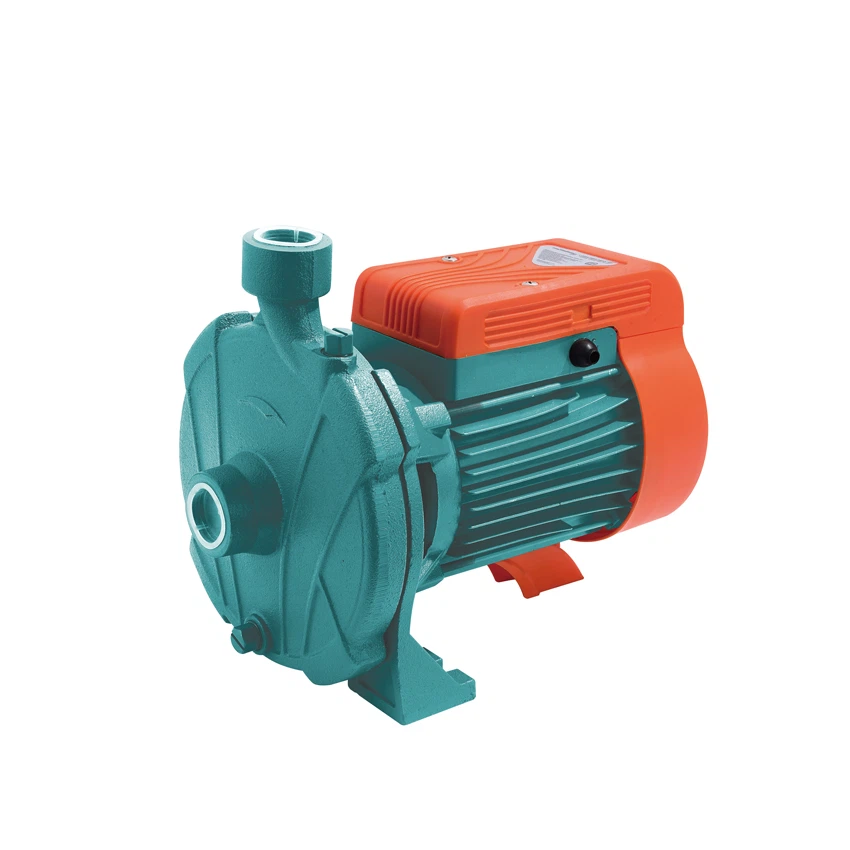
- Clean Fluids: If you're dealing with clean fluids that are free of solids, such as water, oil, or chemicals, a closed impeller is usually the best choice. Closed impellers offer high efficiency and good suction capabilities, making them suitable for a wide range of applications. You can find more information about our Standard Centrifugal Pump with closed impellers on our website.
- Fluids with Solids: If the fluid contains solids or fibrous materials, an open or semi-open impeller is a better option. Open impellers are ideal for handling high concentrations of solids, while semi-open impellers offer a good balance between efficiency and solids handling. Our Standard Centrifugal Pump with open or semi-open impellers can handle a variety of applications with solids.
- Low Flow Rates and High Pressures: If you need a pump that can handle low flow rates and high pressures, a closed impeller with a high number of vanes is usually the best choice. Closed impellers with more vanes can generate higher pressures and provide better performance at low flow rates.
- High Flow Rates and Low Pressures: For applications that require high flow rates and low pressures, an open or semi-open impeller with a larger diameter is a better option. Open and semi-open impellers can handle larger volumes of fluid and provide better performance at high flow rates.
It's important to note that these are just general guidelines, and the best impeller type for your application may vary depending on the specific requirements. If you're not sure which impeller type is right for you, don't hesitate to contact us. Our team of experts can help you select the best pump and impeller combination for your needs.

Other Considerations
In addition to the impeller type, there are other factors that you should consider when selecting a standard centrifugal pump. These include:
- Material of Construction: The material of the impeller and other pump components should be compatible with the fluid being pumped. For example, if you're pumping corrosive fluids, you'll need a pump made of corrosion-resistant materials, such as stainless steel or plastic.
- Speed and Power: The speed and power of the pump should be selected based on the flow rate and pressure requirements of your application. A pump that is too small may not be able to meet the demand, while a pump that is too large may be inefficient and waste energy.
- Maintenance and Serviceability: Consider the ease of maintenance and serviceability of the pump. A pump that is easy to disassemble and clean will reduce downtime and maintenance costs.
Contact Us for Your Pump Needs
If you're in the market for a standard centrifugal pump, we're here to help. As a leading supplier of Standard Centrifugal Pump and 110v Centrifugal Pump, we offer a wide range of pumps with different impeller types to meet your specific needs. Our team of experts can provide you with personalized advice and help you select the best pump for your application.
Whether you're looking for a pump for a small residential application or a large industrial project, we have the expertise and experience to deliver the right solution. Contact us today to discuss your requirements and get a quote. We look forward to working with you!
References
- Karassik, I. J., Messina, J. P., Cooper, P. T., & Heald, C. C. (2008). Pump Handbook. McGraw-Hill.
- Stepanoff, A. J. (1957). Centrifugal and Axial Flow Pumps: Theory, Design, and Application. Wiley.
Send Inquiry