



What is the cavitation phenomenon in a standard centrifugal pump?
Jul 03, 2025
Leave a message
In the realm of fluid mechanics and industrial applications, the standard centrifugal pump stands as a cornerstone for moving liquids from one place to another. As a trusted supplier of standard centrifugal pumps, I've witnessed firsthand the importance of understanding the intricacies of these devices. One such crucial aspect is the cavitation phenomenon, which can significantly impact the performance and longevity of a centrifugal pump.
What is Cavitation?
Cavitation occurs when the pressure of a liquid within a pump drops below its vapor pressure, causing the formation of vapor bubbles. These bubbles are carried along the flow path until they reach a region of higher pressure, where they collapse suddenly. This collapse generates high - energy shockwaves that can cause damage to the pump components.
To understand this better, let's delve into the working principle of a standard centrifugal pump. A centrifugal pump operates by converting the rotational energy of an impeller into kinetic energy of the fluid. As the impeller rotates, it creates a low - pressure area at the eye of the impeller. The fluid is then drawn into this low - pressure area and accelerated by the impeller blades. However, if the pressure at the eye of the impeller drops below the vapor pressure of the liquid, cavitation can occur.
Causes of Cavitation in a Standard Centrifugal Pump
There are several factors that can lead to cavitation in a centrifugal pump. One of the primary causes is a high suction lift. When the pump is located too far above the liquid source, the pressure at the suction side of the pump decreases. If this pressure drops below the vapor pressure of the liquid, cavitation will start.
Another cause is a clogged or restricted suction line. A blockage in the suction line can impede the flow of liquid into the pump, causing a drop in pressure at the suction side. Similarly, a high flow rate can also contribute to cavitation. If the pump is operating at a flow rate higher than its design capacity, the pressure at the impeller eye may drop below the vapor pressure.
In addition, the temperature of the liquid plays a role. As the temperature of the liquid increases, its vapor pressure also increases. This means that at higher temperatures, it is easier for the pressure at the impeller eye to drop below the vapor pressure, leading to cavitation.
Effects of Cavitation
Cavitation can have several detrimental effects on a standard centrifugal pump. Firstly, it can cause significant damage to the pump components. The high - energy shockwaves generated by the collapsing vapor bubbles can erode the impeller blades, casing, and other internal parts of the pump. This erosion can lead to reduced efficiency, increased vibration, and noise.
Secondly, cavitation can reduce the performance of the pump. As the impeller blades are eroded, the pump's ability to transfer energy to the fluid is diminished. This results in a decrease in the flow rate and head of the pump. In severe cases, cavitation can even cause the pump to fail completely.
Detecting Cavitation
Detecting cavitation early is crucial to prevent damage to the pump. One of the most common ways to detect cavitation is by listening for unusual noises. Cavitation often produces a distinct rattling or crackling sound, which can be heard near the pump.
Another method is to monitor the pump's performance. A sudden drop in the flow rate or head, or an increase in vibration, can be signs of cavitation. Additionally, visual inspection of the pump components can reveal signs of erosion caused by cavitation.
Preventing Cavitation
As a supplier of standard centrifugal pumps, I understand the importance of preventing cavitation. There are several measures that can be taken to prevent cavitation in a centrifugal pump.
Firstly, ensure that the pump is properly sized for the application. Select a pump with a sufficient NPSH (Net Positive Suction Head) margin. The NPSH is the difference between the absolute pressure at the suction side of the pump and the vapor pressure of the liquid. A higher NPSH margin reduces the risk of cavitation.
Secondly, keep the suction line clean and free from blockages. Regularly inspect and maintain the suction line to ensure smooth flow of liquid into the pump.
Thirdly, control the flow rate. Operate the pump within its design flow range to avoid excessive pressure drops at the impeller eye.

Finally, consider the temperature of the liquid. If the liquid is at a high temperature, take appropriate measures to reduce the temperature or select a pump that is suitable for high - temperature applications.
Our Centrifugal Pump Offerings
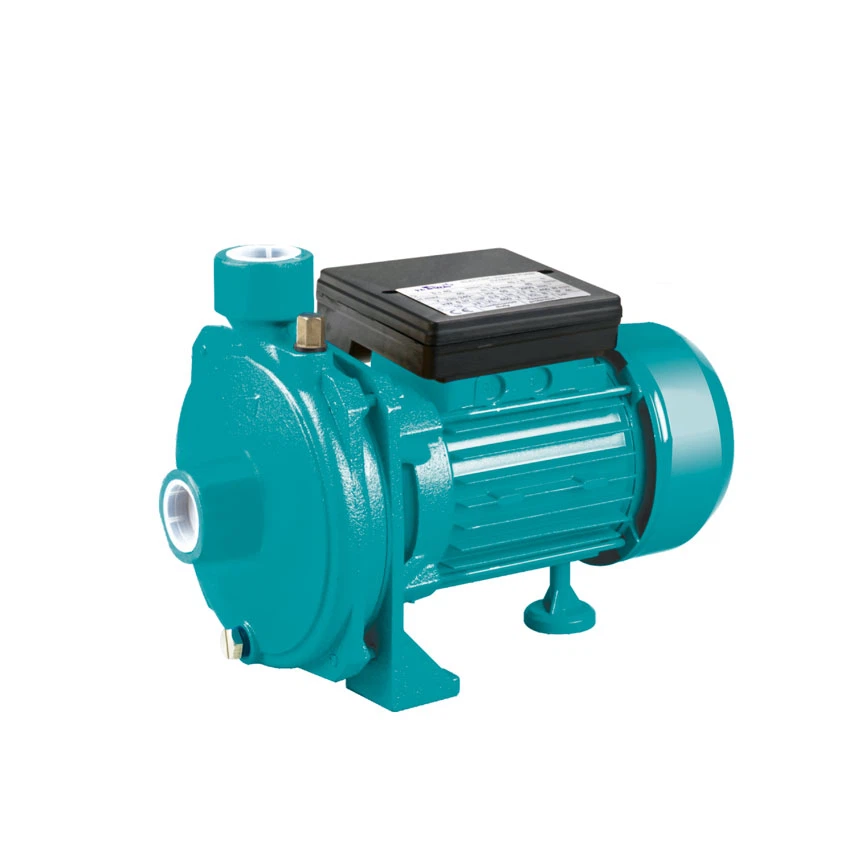
At our company, we offer a wide range of standard centrifugal pumps designed to meet various industrial needs. Our 1.5 Hp Centrifugal Water Pump is a popular choice for many water - related applications. It is designed to provide efficient and reliable performance, with a focus on preventing cavitation.
Our Stainless Centrifugal Pump is made from high - quality stainless steel, which offers excellent corrosion resistance. This pump is suitable for applications where the liquid is corrosive or where hygiene is a concern.
We also have the 1 2 Hp Centrifugal Pump, which is ideal for smaller - scale applications. This pump is compact, energy - efficient, and designed to operate without cavitation issues.
Conclusion
Cavitation is a serious issue that can affect the performance and longevity of a standard centrifugal pump. As a supplier, we are committed to providing high - quality pumps and sharing our knowledge to help our customers prevent cavitation. By understanding the causes, effects, detection, and prevention of cavitation, you can ensure the efficient and reliable operation of your centrifugal pump.
If you are in the market for a standard centrifugal pump or have any questions about cavitation, we invite you to contact us for a detailed discussion. Our team of experts is ready to assist you in selecting the right pump for your application and providing guidance on cavitation prevention.
References
- Stepanoff, A. J. (1957). Centrifugal and Axial Flow Pumps: Theory, Design, and Application. John Wiley & Sons.
- Karassik, I. J., Messina, J. P., Cooper, P. T., & Heald, C. C. (2008). Pump Handbook. McGraw - Hill.
- Idelchik, I. E. (2007). Handbook of Hydraulic Resistance. Begell House.
Send Inquiry