



What is the coupling in a centrifugal pump?
Oct 08, 2025
Leave a message
As a centrifugal pump supplier, I often encounter customers who are curious about the components of centrifugal pumps, especially the coupling. In this blog post, I'll delve into what coupling is in a centrifugal pump, its functions, types, and why it's crucial for the proper operation of the pump.
What is a Coupling in a Centrifugal Pump?
A coupling in a centrifugal pump is a mechanical device used to connect the pump shaft to the motor shaft. Its primary role is to transmit power from the motor to the pump, allowing the impeller in the pump to rotate and generate the necessary centrifugal force to move fluids. It acts as a bridge between the power source (the motor) and the working part (the pump), ensuring that the rotational motion of the motor is efficiently transferred to the pump.
Functions of the Coupling
- Power Transmission: The most fundamental function of the coupling is to transfer the mechanical power produced by the motor to the pump. Without a coupling, the motor and the pump would operate independently, and the pump would not be able to function.
- Alignment Compensation: In an ideal scenario, the pump shaft and the motor shaft would be perfectly aligned. However, in real - world applications, achieving perfect alignment is often difficult due to factors such as installation errors, thermal expansion, and vibration. A coupling can compensate for minor misalignments between the two shafts, reducing stress on the shafts and bearings. This helps to extend the service life of the pump and motor components.
- Vibration Damping: Centrifugal pumps can generate significant vibrations during operation. These vibrations can not only cause noise but also lead to premature wear and failure of components. A coupling can absorb and dampen some of these vibrations, protecting the pump and motor from the harmful effects of excessive vibration.
- Overload Protection: Some types of couplings are designed to act as a safety device in case of an overload. For example, a shear - pin coupling will break the connection between the motor and the pump when the torque exceeds a certain limit, preventing damage to the motor and pump.
Types of Couplings Used in Centrifugal Pumps
- Rigid Couplings: Rigid couplings are the simplest type of couplings. They provide a solid connection between the pump shaft and the motor shaft, with no flexibility. They are typically used in applications where perfect alignment can be achieved and maintained. Rigid couplings are relatively inexpensive and have high torque - transmitting capacity. However, they require precise alignment during installation, and any misalignment can cause excessive stress on the shafts and bearings.
- Flexible Couplings: Flexible couplings are more commonly used in centrifugal pumps because they can compensate for misalignments. There are several types of flexible couplings:
- Elastomeric Couplings: These couplings use an elastomeric element, such as rubber or polyurethane, to transmit torque. The elastomeric element can deform to accommodate misalignments and dampen vibrations. Elastomeric couplings are easy to install and maintain, and they are relatively inexpensive. For example, a jaw - type elastomeric coupling consists of two hubs and an elastomeric spider. The spider fits between the jaws of the two hubs and transmits torque while allowing for some misalignment.
- Gear Couplings: Gear couplings use gears to transmit torque between the shafts. They can handle high torque and speed, and they can compensate for both angular and parallel misalignments. Gear couplings are more expensive than elastomeric couplings and require more maintenance, such as lubrication.
- Fluid Couplings: Fluid couplings use a fluid (usually oil) to transmit torque. They provide a smooth start - up and can protect the motor and pump from shock loads. Fluid couplings are often used in applications where the pump needs to start under heavy loads.
Importance of Choosing the Right Coupling
Selecting the appropriate coupling for a centrifugal pump is crucial for the efficient and reliable operation of the pump system. A poorly chosen coupling can lead to a variety of problems, such as increased vibration, premature bearing wear, and reduced pump efficiency.
When choosing a coupling, several factors need to be considered:
- Torque Requirements: The coupling must be able to transmit the maximum torque that the pump will encounter during operation. It's important to calculate the torque based on the pump's power rating, speed, and operating conditions.
- Misalignment Tolerance: Consider the expected amount of misalignment between the pump shaft and the motor shaft. Different types of couplings have different misalignment - compensation capabilities.
- Speed: The coupling must be able to operate at the pump's operating speed without causing excessive vibration or wear.
- Environment: The operating environment, such as temperature, humidity, and the presence of corrosive substances, can affect the performance and durability of the coupling. For example, in a corrosive environment, a coupling made of corrosion - resistant materials should be selected.
Our Product Range
As a centrifugal pump supplier, we offer a wide range of centrifugal pumps with different types of couplings to meet the diverse needs of our customers. Our Electric Centrifugal Water Pump is designed for efficient water transfer in various applications. It is equipped with a high - quality coupling that ensures reliable power transmission and long - term operation.
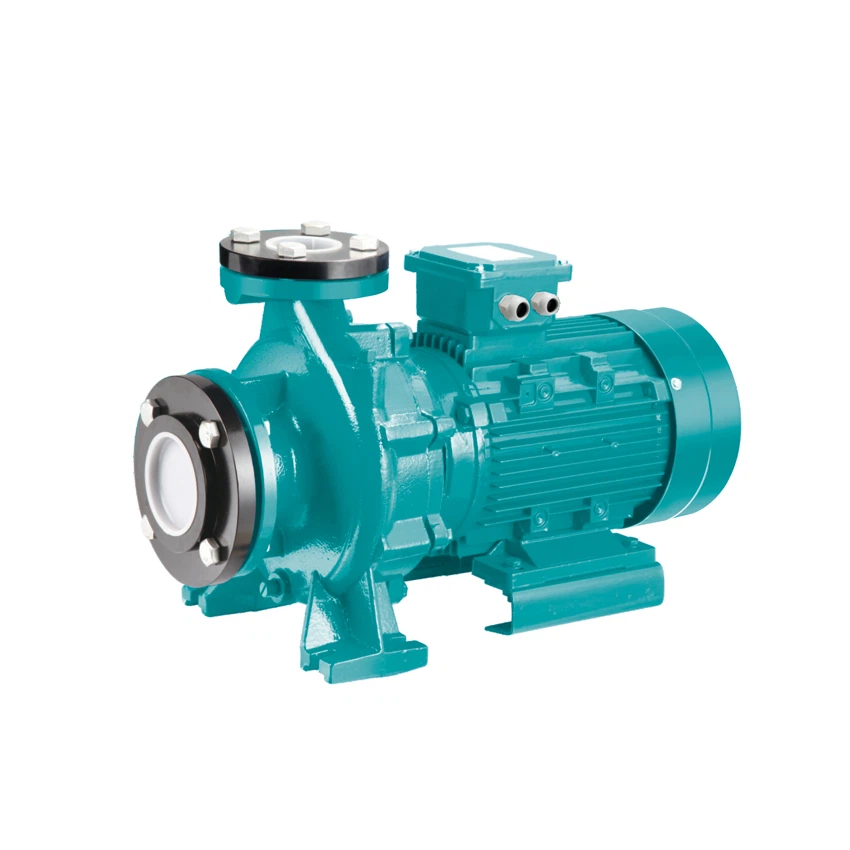

If you need a pump for handling dirty water or debris, our Centrifugal Trash Pump - factory is an excellent choice. The coupling in this pump is selected to withstand the harsh operating conditions associated with trash pumping.
For smaller - scale applications, our 1 2 Hp Centrifugal Pump is a cost - effective solution. It comes with a coupling that is optimized for the pump's power and speed requirements.
Conclusion
In conclusion, the coupling is an essential component in a centrifugal pump. It plays a vital role in power transmission, alignment compensation, vibration damping, and overload protection. Choosing the right coupling is crucial for the efficient and reliable operation of the pump system. As a centrifugal pump supplier, we understand the importance of couplings and offer a range of pumps with high - quality couplings to meet your specific needs.
If you are interested in our centrifugal pumps or have any questions about couplings, please feel free to contact us for procurement and further discussion. We are committed to providing you with the best solutions for your pumping needs.
References
- Karassik, I. J., Messina, J. P., Cooper, P. T., & Heald, C. C. (2008). Pump Handbook. McGraw - Hill.
- Stepanoff, A. J. (1957). Centrifugal and Axial Flow Pumps: Theory, Design, and Application. Wiley.
Send Inquiry