



How to calculate the NPSH required for a centrifugal pump?
Jun 25, 2025
Leave a message
As a seasoned supplier of centrifugal pumps, I understand the critical importance of accurately calculating the Net Positive Suction Head Required (NPSH Required) for these essential pieces of equipment. In this blog post, I'll delve into the intricacies of NPSH Required calculation, its significance, and how it impacts the performance and longevity of centrifugal pumps.
Understanding NPSH
Before we dive into the calculation, let's clarify what NPSH is. Net Positive Suction Head is the measure of the pressure available at the suction port of a pump to prevent the liquid from vaporizing. When the pressure at the suction side drops below the vapor pressure of the liquid, vapor bubbles form. This phenomenon is known as cavitation. Cavitation can cause a range of problems, including reduced pump efficiency, increased noise and vibration, and even damage to the pump impeller and casing.
There are two types of NPSH: Net Positive Suction Head Available (NPSH Available) and Net Positive Suction Head Required (NPSH Required). NPSH Available is the actual pressure available at the pump suction, which is determined by the system design, elevation, and fluid properties. On the other hand, NPSH Required is the minimum pressure required at the pump suction to prevent cavitation, and it is a characteristic of the pump itself.
Factors Affecting NPSH Required
Several factors influence the NPSH Required for a centrifugal pump. These include:
- Pump Design: The impeller design, pump speed, and flow rate all play a role in determining the NPSH Required. Pumps with larger impellers and higher flow rates generally require more NPSH.
- Fluid Properties: The vapor pressure, density, and viscosity of the fluid being pumped affect the NPSH Required. Fluids with higher vapor pressures require more NPSH to prevent cavitation.
- Temperature: As the temperature of the fluid increases, its vapor pressure also increases, which in turn increases the NPSH Required.
- Flow Rate: The NPSH Required typically increases with an increase in flow rate. This is because higher flow rates result in higher velocities and pressure drops at the pump suction.
Calculating NPSH Required
Calculating the NPSH Required for a centrifugal pump involves a combination of theoretical analysis and empirical data. Most pump manufacturers provide NPSH Required curves for their pumps, which show the relationship between the NPSH Required and the flow rate. These curves are typically obtained through laboratory testing under specific conditions.
However, if you don't have access to the manufacturer's NPSH Required curve, you can use the following general formula to estimate the NPSH Required:
[NPSH_{R} = \frac{P_{atm} - P_{v}}{\rho g} + h_{s} - h_{f}]
Where:
- (NPSH_{R}) is the Net Positive Suction Head Required (in meters or feet)
- (P_{atm}) is the atmospheric pressure (in Pascals or pounds per square inch)
- (P_{v}) is the vapor pressure of the fluid at the pumping temperature (in Pascals or pounds per square inch)
- (\rho) is the density of the fluid (in kilograms per cubic meter or pounds per cubic foot)
- (g) is the acceleration due to gravity (9.81 m/s² or 32.2 ft/s²)
- (h_{s}) is the static suction head (in meters or feet), which is the vertical distance between the fluid level in the suction tank and the pump centerline
- (h_{f}) is the friction head loss in the suction piping (in meters or feet), which includes losses due to pipe length, diameter, fittings, and valves
It's important to note that this formula provides only an estimate of the NPSH Required, and it may not be accurate for all pump applications. In some cases, additional factors such as the presence of air or gas in the fluid, non - Newtonian fluid behavior, and the effects of pump inlet geometry may need to be considered.
Importance of Accurate NPSH Calculation
Accurately calculating the NPSH Required is crucial for ensuring the proper operation and longevity of a centrifugal pump. If the NPSH Available is less than the NPSH Required, cavitation will occur, which can lead to a variety of problems, including:

- Reduced Pump Efficiency: Cavitation causes the pump to lose efficiency as the vapor bubbles disrupt the flow of the fluid through the impeller. This results in a decrease in the pump's flow rate and head, as well as an increase in power consumption.
- Increased Noise and Vibration: Cavitation produces a characteristic noise and vibration, which can be a sign of impending pump failure. The noise and vibration can also cause damage to the pump and other components in the system.
- Impeller and Casing Damage: The collapse of vapor bubbles during cavitation generates high - energy shock waves that can erode the impeller and casing material over time. This can lead to premature wear and failure of the pump.
- System Downtime and Maintenance Costs: Cavitation - related problems can cause unexpected system downtime, which can result in lost production and increased maintenance costs. Regular maintenance and replacement of damaged pump components can be expensive and time - consuming.
Selecting the Right Pump Based on NPSH Requirements
When selecting a centrifugal pump for a specific application, it's essential to ensure that the NPSH Available in the system is greater than the NPSH Required by the pump. This can be achieved by either increasing the NPSH Available or selecting a pump with a lower NPSH Required.
To increase the NPSH Available, you can:
- Increase the Static Suction Head: Raise the fluid level in the suction tank or lower the pump elevation to increase the vertical distance between the fluid level and the pump centerline.
- Reduce the Friction Head Loss: Use larger diameter pipes, minimize the number of fittings and valves in the suction piping, and ensure that the piping is properly sized and installed to reduce the pressure drop in the suction line.
- Lower the Fluid Temperature: If possible, reduce the temperature of the fluid being pumped to lower its vapor pressure.
If increasing the NPSH Available is not feasible, you can select a pump with a lower NPSH Required. Some pumps are designed specifically for applications with low NPSH Available, such as self - priming pumps or pumps with special impeller designs.
Our Centrifugal Pump Offerings
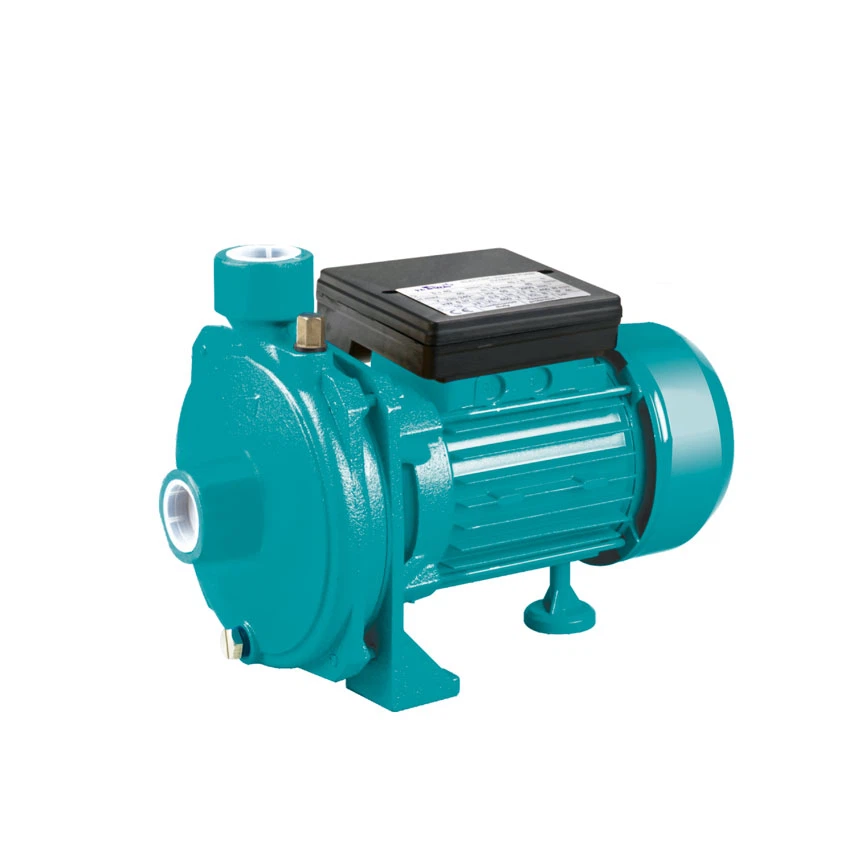
As a centrifugal pump supplier, we offer a wide range of pumps to meet the diverse needs of our customers. Our product portfolio includes Stainless Centrifugal Pump, which are ideal for applications where corrosion resistance is required, such as in the chemical and food processing industries. We also offer Electric Centrifugal Water Pump for water supply and irrigation applications, as well as Portable Centrifugal Pump for temporary or mobile pumping needs.
All of our pumps are designed and manufactured to meet the highest quality standards, and we provide detailed technical information, including NPSH Required curves, to help our customers select the right pump for their applications. Our experienced sales and engineering team can also assist you in calculating the NPSH Available in your system and ensuring that the pump you choose is properly sized and installed.
Conclusion
Calculating the NPSH Required for a centrifugal pump is a critical step in the pump selection and system design process. By understanding the factors that affect NPSH Required, using the appropriate calculation methods, and ensuring that the NPSH Available is greater than the NPSH Required, you can prevent cavitation and ensure the reliable operation of your pump.
If you have any questions about NPSH calculation or need assistance in selecting the right centrifugal pump for your application, please don't hesitate to contact us. Our team of experts is ready to help you find the best solution for your pumping needs.
References
- Karassik, I. J., Messina, J. P., Cooper, P. T., & Heald, C. C. (2008). Pump Handbook. McGraw - Hill Professional.
- Stepanoff, A. J. (1957). Centrifugal and Axial Flow Pumps: Theory, Design, and Application. John Wiley & Sons.
Send Inquiry